
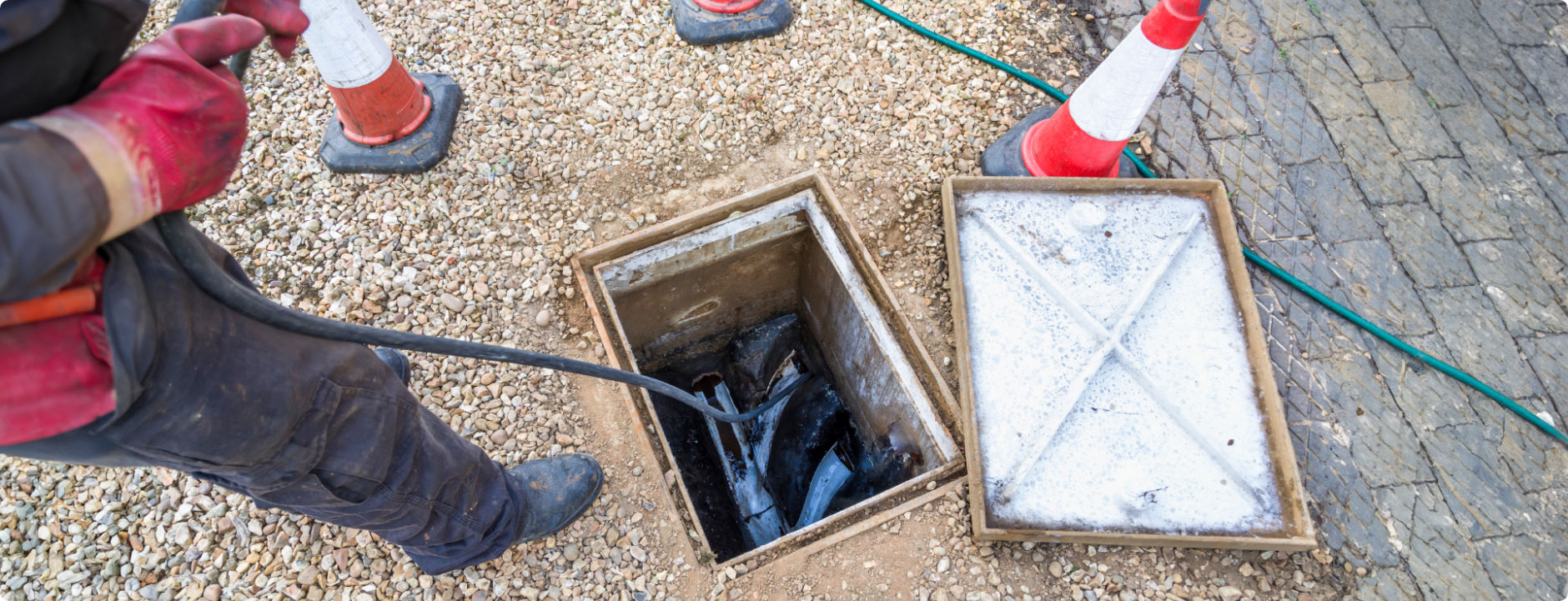
Septic Tanks & Water Treatment Plants
- 100% satisfaction guarantee
- No call out charge, competitive prices!
- 24-7, 365 Emergency call outs
- 1 Hour response time
- Done by certified & fully-insured technicians
Get A Free Quote
Fast response — no obligation
24/7 Emergency
Round-the-clock cover, 365 days a year
No Call Out Charge
You only pay for the work we carry out
1 Hour Response
Fast dispatch to Bournemouth & Poole
Specialist Septic Tank & Water Treatment Plant Services in Bournemouth
"Excellent service from start to finish. The team sorted our septic tank quickly and explained everything clearly. Very professional and great value."
Septic Tank & Water Treatment Services
Local, family owned & operated
Serving Bournemouth & Surrounding Areas Since 2001
Comprehensive Septic Tank & Water Treatment Information
A septic tank is an underground wastewater treatment system used in properties that are not connected to a mains sewer. Wastewater from the property flows into the tank where solids settle to the bottom and form sludge, while lighter materials float to the top as scum. The liquid in the middle — known as effluent — flows out to a drainage field where it is naturally filtered through the soil.
Septic tanks are widely used in rural and semi-rural areas of Dorset and Hampshire, including many properties in and around Bournemouth. They require regular emptying — typically every 1 to 3 years depending on usage — as well as periodic inspection to ensure the system is functioning correctly and complying with current environmental regulations.
A water treatment plant (also known as a sewage treatment plant or package treatment plant) is a more advanced alternative to a septic tank. Unlike a septic tank, a water treatment plant uses mechanical and biological processes to treat wastewater to a much higher standard, producing effluent that is clean enough to discharge directly into a watercourse such as a stream or ditch.
Water treatment plants are increasingly required under current Environment Agency regulations, particularly where septic tanks discharge to surface water — which has been prohibited under General Binding Rules since 2020. If your septic tank discharges to a watercourse, you may be legally required to upgrade to a water treatment plant.
Choosing between a septic tank and a water treatment plant depends on several factors including your discharge location, property usage, budget, and local regulations. Septic tanks are simpler and cheaper to install, require no electricity to operate, and have lower maintenance costs. However, their effluent quality is lower and they cannot discharge to surface water.
Water treatment plants produce significantly higher quality effluent, suitable for direct watercourse discharge, but they require electricity to run, involve more complex mechanical components, and typically need more frequent professional servicing. Our specialists can assess your property and advise on the most appropriate and compliant system.
Installing a new septic tank requires careful planning and compliance with current building regulations and Environment Agency guidelines. Our team carries out a full site assessment, including soil percolation tests, to determine the correct tank size and drainage field design for your property and anticipated usage.
We handle all aspects of installation, from excavation and tank placement to drainage field construction and connection to your property's pipework. All installations are carried out to the relevant British Standards and comply with the General Binding Rules for small sewage discharges. On completion, we provide full documentation for your records.
Regular emptying and maintenance are essential to keeping your septic tank functioning correctly and avoiding costly problems. We recommend having your tank professionally emptied every 1 to 3 years, depending on the number of occupants and daily usage. Leaving a tank too long between empties can lead to sludge overflow into the drainage field, which can block and damage the field — an expensive repair.
Our tanker vehicles can access most locations and carry out a thorough desludge of your tank. We also inspect the tank for structural issues, check inlet and outlet pipes, and provide a written report. If we identify any problems during the service, we can advise on the most cost-effective repair options.
Septic tanks can develop a range of problems over time, including cracked or damaged tank bodies, failed inlet or outlet baffles, collapsed soakaway drainage fields, and faulty distribution boxes. These issues can cause the system to back up, discharge poorly treated effluent, or fail inspections — all of which require prompt professional attention.
Our engineers are experienced in diagnosing and repairing all types of septic tank problems. We use CCTV cameras to inspect the internal condition of tanks and drainage fields, allowing us to identify issues accurately before recommending repairs. All repair works are covered by our up to 10-year workmanship guarantee.
Water treatment plants require regular professional servicing to maintain their mechanical and biological components. Unlike septic tanks, the aerobic treatment process in a water treatment plant relies on pumps, air blowers, and electronic controls — all of which require periodic inspection, cleaning and adjustment to keep the system performing to the required standard.
We carry out routine servicing for all major makes and models of water treatment plant, including Klargester, Biodisc, Titan, and Mantis. Our service visits include checking and cleaning all components, testing effluent quality, inspecting electrical systems, and providing a full written service report. We recommend annual servicing as a minimum, with bi-annual visits for older or higher-usage systems.
Environmental compliance is increasingly important for properties with private wastewater treatment systems. The Environment Agency's General Binding Rules, updated in January 2020, set out the conditions under which septic tanks and small sewage treatment plants can legally discharge. Non-compliance can result in enforcement action and significant fines.
Key requirements include: septic tanks must not discharge to surface water; treatment plants discharging to surface water must meet the relevant British Standard for effluent quality; systems must be maintained in good working order; and you must register your system if it's a new installation or if you're upgrading from a non-compliant system. Our team can advise on your obligations and help you achieve and maintain full compliance.
Septic tank emergencies can occur at any time — a backed-up system, overflowing tank, or sewage breaking out to the surface requires immediate professional attention. Not only is this unpleasant and disruptive, but it can pose serious health risks and cause environmental damage, potentially resulting in regulatory action.
Our emergency response team is available 24 hours a day, 7 days a week, 365 days a year. When you call our emergency line, we'll dispatch an experienced engineer to your property as quickly as possible. We carry the equipment to pump out overloaded tanks, clear blocked outlet pipes, and implement temporary measures to prevent further discharge while a permanent repair is arranged. We charge no call-out fee for emergency visits.
The drainage field (also called a soakaway or leachfield) is a critical part of any septic tank or treatment plant system, responsible for the final filtration and dispersal of effluent into the ground. Over time, drainage fields can become blocked by sludge, tree root ingress, or soil compaction — leading to effluent backing up into the tank or breaking out to the surface.
We use CCTV cameras and percolation testing to assess the condition of drainage fields and identify the cause of any failure. In many cases, blocked drainage fields can be restored through jetting and redirection of flows. Where the field has failed irreparably, we can design and install a new drainage field in compliance with current regulations, including the BS EN 12566-2 standard.
Why Choose Bournemouth Drains for Septic Tank Services?
Expert Technicians
Fully certified and insured engineers using the latest techniques.
Rapid Response
1-hour response, 24/7. No call-out charges.
Advanced Equipment
CCTV surveys, tanker vehicles and specialist tools for every job.
100% Satisfaction
Top-rated in Bournemouth & Poole, backed by our guarantee.
Recent Reviews
John Fahy
Can't recommend Blocked Drains Bournemouth highly enough… Brilliant service!
Sarah O'Neill
Excellent service… twice the price elsewhere… job done in about 10 minutes. Highly recommend.
We Understand Septic Tank Problems Can Be Stressful
That's why we're here for you 24/7, for those middle of the night emergencies.
01202 986990Contact Us About Septic Tanks
If you require septic tank or water treatment plant services, reach out to Bournemouth Drains today. Our specialists will be happy to provide all the information you need.